










Ammonium Bifluoride, CAS 1341-49-7, is also known as ammonium hydrogen difluoride or acid ammonium fluoride. It is an inorganic fluoride salt with formula NH4HF2, used in etching and cleaning processes. For a fluoride-process inquiry, identify process and material compatibility and safety-control requirements.
Ammonium Bifluoride CAS 1341-49-7
- CAS: 1341-49-7
- Synonyms: Ammonium Hydrogen Difluoride; Acid Ammonium Fluoride
- Einecs: 215-676-4
- Molecular Formula: NH₄HF₂
- Grade: Confirm the current product-specific specification.
- Package: Confirm packaging requirements for the proposed material and destination.
Product Description
Ammonium Bifluoride, also called ammonium hydrogen difluoride, is an inorganic fluoride salt identified by CAS 1341-49-7 and formula NH₄HF₂.
Molecular formula: NH₄HF₂.
Molar mass: 57.04 g/mol.
CAS Number: 1341-49-7.
EINECS: 215-676-4.
Melting point: confirm the current product-specific specification.
Boiling point: confirm the current product-specific specification.
Water content or hygroscopicity requirements: confirm the current product-specific specification.
Density: confirm the current product-specific specification.
Physical form: confirm the current product-specific specification.
Safety classification and handling controls: confirm the current product-specific specification.
Hazard classification: confirm the current product-specific specification.
Safety review
Handling, storage, and process requirements must be reviewed against the applicable SDS and current product-specific specification.
Industrial process context
Ammonium Bifluoride may be evaluated for fluoride-containing industrial processes only after process compatibility, material compatibility, safety controls, product specification, and destination requirements are confirmed.
FAQ - Technical & Supply Chain
-
Q:
Are Ammonium Bifluoride and Ammonium Hydrogen Difluoride the same salt?
A: Yes. Both names identify NH4HF2, CAS 1341-49-7. It is not ammonium fluoride, ammonium fluoroborate or a prepared etching solution. State the CAS number, solid assay and intended industrial process when requesting a grade. -
Q:
What is Ammonium Bifluoride used for?
A: It is used in controlled fluoride-containing industrial processes such as metal surface treatment, glass etching and cleaning, aluminum processing and selected chemical syntheses. Process and material compatibility must be reviewed before use because the material is corrosive and releases hazardous fluoride species. -
Q:
Which specifications should be agreed for industrial Ammonium Bifluoride?
A: Confirm assay and method, moisture, water-insoluble matter, ammonium fluoride or free-acid basis where specified, chloride, sulfate, hexafluorosilicate and relevant metals. Etching and metal-treatment processes may need different impurity limits. -
Q:
What should be confirmed before Ammonium Bifluoride shipment?
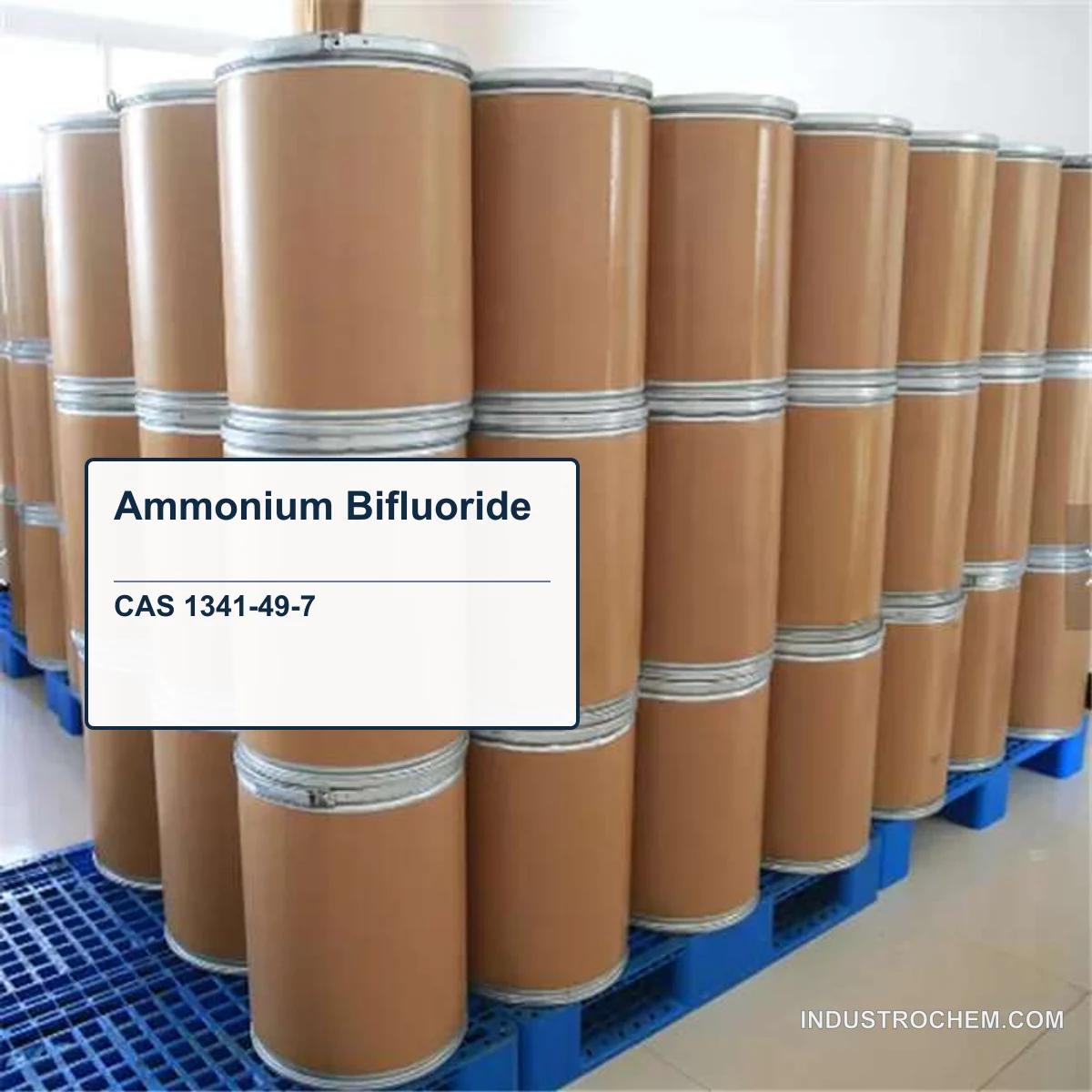
A: Agree net weight, moisture-resistant compatible packaging, pallet protection, labeling and destination transport requirements. Ammonium Bifluoride is commonly shipped as UN 1727, Hazard Class 8 corrosive solid; confirm the exact packing group, local handling, ventilation and waste controls before shipment. -
Q:
What are typical physical properties of Ammonium Bifluoride?
A: Ammonium Bifluoride is normally a white crystalline, flake or granular solid that is hygroscopic and readily water-soluble. Typical values are density about 1.5 g/cm3, melting around 125-126 C, and boiling or decomposition around 230-240 C.
Ordering & Documentation
Key information for document requests, quotations, and supply planning.
Documents
Tell us which documents your procurement team needs. Before an order, we will check whether the quoted source can provide them for the offered lot.
Quotation
Send the CAS number, grade, quantity, packing preference and destination.
Sample & Supply
Ask whether samples, trial quantities or repeat orders are possible. We will check each request against the sourced product and current offer.
Storage & Shipping
Product-specific conditions are confirmed before order.