









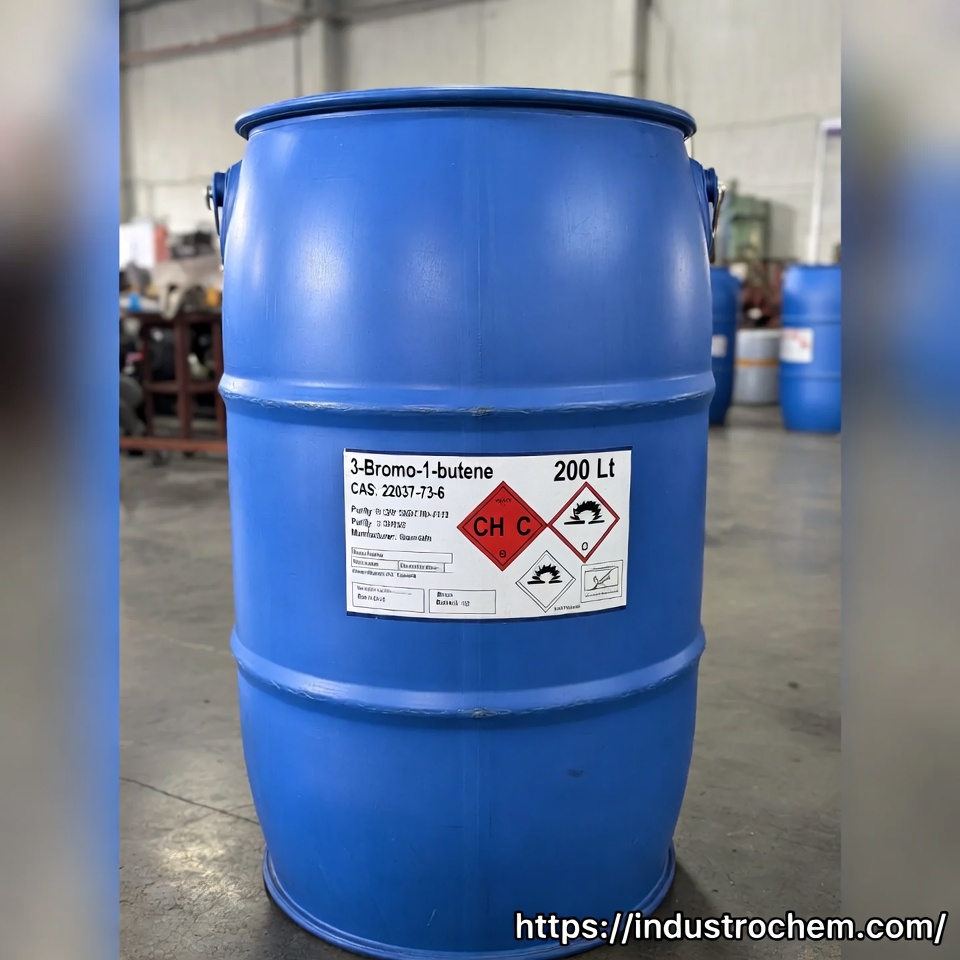
3‑Bromo‑1‑butene is an aliphatic brominated alkene characterized by a terminal carbon–carbon double bond and a bromine substituent on the carbon chain. The coexistence of olefinic and halogen functional groups defines its reactivity profile and positions it as a specialty organic intermediate within professional chemical supply chains. 3‑Bromo‑1‑butene (CAS 22037-73-6) is handled as a defined molecular substance in regulated industrial and research environments, with emphasis on material identification, documentation, and compliance rather than end‑use formulation.
This material is supplied with standardized specifications and complete technical documentation including MSDS, TDS, and COA, supporting compliant handling and traceability.
3‑Bromo‑1‑butene CAS 22037-73-6
- CAS: 22037-73-6
- Synonyms: 3-Bromo-1-butene, 1-Butenyl bromide, Allylic bromide C4
- Einecs: 203-706-5
- Molecular Formula: C₄H₇Br
- Grade: Industrial grade 99%
- Package: 200kg iron drum or 50kg plastic drum packaging
Product Description
Physicochemical properties
| Property | Value |
|---|---|
| IUPAC Name | 3-Bromo-1-butene |
| CAS Number | 22037-73-6 |
| Molecular Formula | C₄H₇Br |
| Molecular Weight | 135.00 g/mol (approximate) / 133.97300 (exact) |
| Density | 1.307 g/cm³ |
| Boiling Point | 88.7 °C at 760 mmHg |
| Flash Point | 7.2 °C |
| Refractive Index | 1.454 |
| Vapor Pressure | 68.2 mmHg at 25 °C |
| Solubility | Insoluble in water; soluble in organic solvents |
| Appearance | Liquid |
Application Areas
Organic synthesis: used as an allyl bromide reagent for constructing C-C bonds or heterocyclic compounds.
Pharmaceutical intermediates: used for synthesizing antibiotics, anti-tumor drugs, or bioactive molecules.
Materials Chemistry: Used as a monomer or crosslinking agent for synthesizing functional polymer materials.
Research purpose: To study the mechanism of electrophilic addition reactions or free radical reactions.
Storage conditions
Sealing and Temperature: Strictly seal the container and store in a cool, ventilated place (recommended temperature ≤ 30 ℃), avoiding direct sunlight.
Isolation requirements: Keep away from sources of fire, heat, and oxidants to prevent static electricity accumulation.
Stability: Stable at room temperature and pressure, but must prevent leakage and volatilization
Safety precautions
Protection: Wear chemical resistant gloves (such as nitrile gloves), goggles or face shields, wear long sleeved lab coats, and avoid direct contact. If in contact with the skin, immediately rinse with plenty of water; Contact the eyes, immediately open the eyelids and rinse with running water for at least 15 minutes, and seek medical attention.
Emergency response: In the event of a leak, immediately evacuate the contaminated area, wear protective equipment before handling, and prevent inhalation of vapors or skin contact.
Waste disposal: Abandoned 3-bromo-1-butene and contaminated containers must be disposed of by professional institutions in accordance with hazardous waste disposal regulations. It is prohibited to dump or mix them with household waste at will.
FAQ - Technical & Supply Chain
-
Q:
Does CAS 109-65-9 specifically correspond to 3‑Bromo‑1‑butene?
A: Yes. CAS 109-65-9 is assigned specifically to the 3‑bromo‑substituted 1‑butene structure. -
Q:
Is 3‑Bromo‑1‑butene supplied as a mixture or formulated product?
A: No. It is supplied as a defined chemical substance for professional handling within regulated industrial or research environments.
Documents and Product Support
For product review and sourcing evaluation, supporting documents can be coordinated according to the product type, inquiry stage, and order requirements.
- COA for batch-based quality reference
- TDS for key physical and chemical information
- SDS / MSDS for handling, storage, and safety reference
- Packing information for sample, trial, and bulk orders
- Technical communication based on application and specification requirements
Information to Confirm Before Quotation
Clear sourcing information helps reduce specification mismatch and allows a more accurate quotation before sample or bulk order discussion.
- Product name and CAS number
- Application or intended end use
- Required purity, grade, or specification
- Sample quantity, trial order, or bulk demand
- Preferred packing form or net weight
- Destination country or port
- Required documents or compliance expectations
Packaging, Storage, and Handling Notes
Packaging form, storage conditions, shelf life, and shipment arrangements should be confirmed according to the product characteristics, package size, and destination requirements.
Before order confirmation, buyers are advised to review the corresponding product documents and confirm whether any special storage, labeling, or handling requirements apply.
Sample, Bulk Order and Repeat Supply Support
Support can be arranged for sample discussion, bulk supply planning, packaging confirmation, and routine sourcing communication based on the actual product and order requirements.
For repeat-use formulations or long-term procurement plans, buyers may discuss specification consistency, packaging preferences, delivery expectations, and document coordination in advance.