








SLES vs SLS: What’s the Difference?
Release time: 2026-05-28
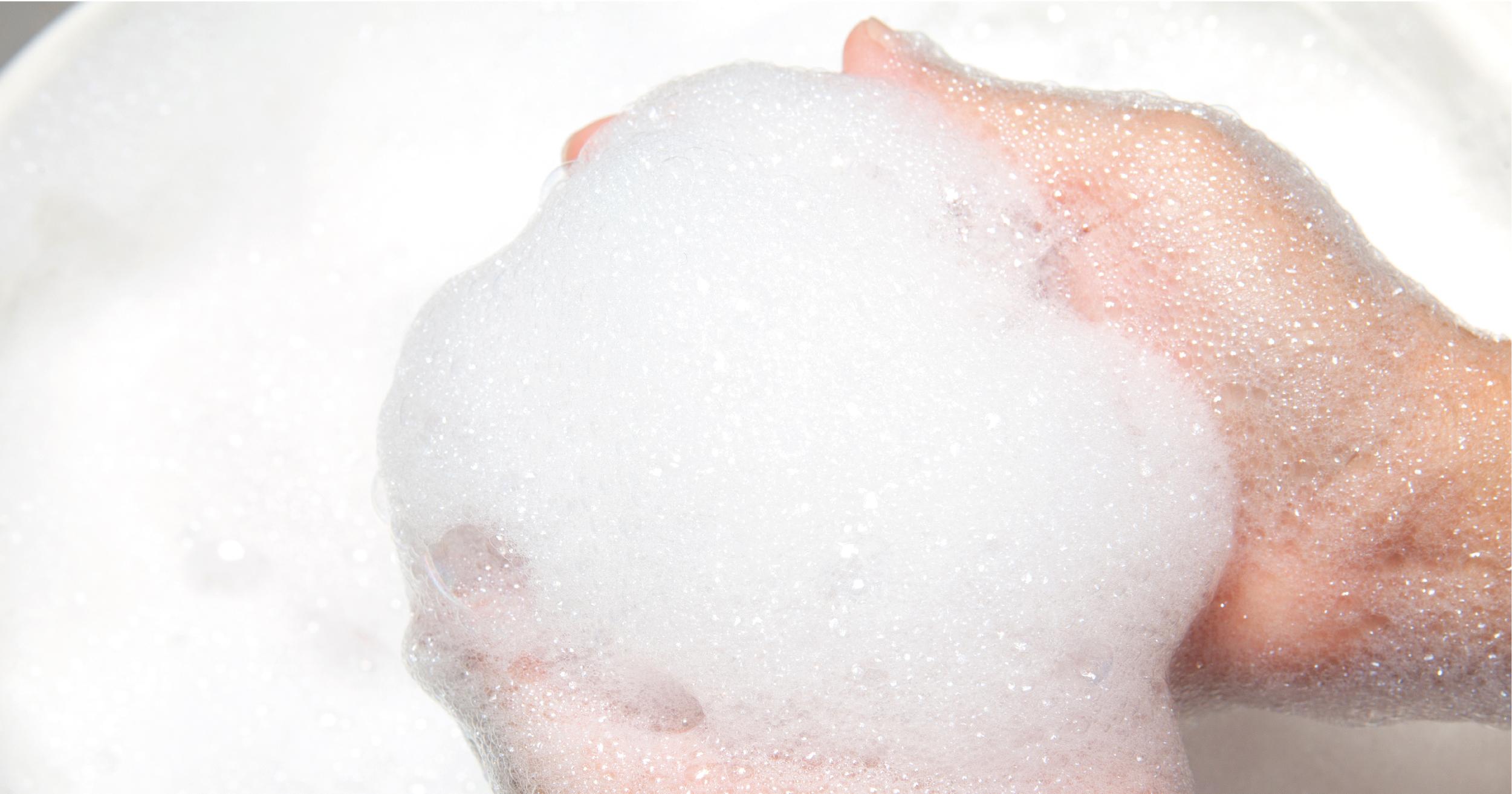
In the personal care and cleaning products industry, surfactants play a critical role in cleansing performance, foam generation, and formulation stability. Among the most widely used surfactants are SLES (Sodium Laureth Sulfate) and SLS (Sodium Lauryl Sulfate). Although their names are similar, these two ingredients have important differences in chemical structure, irritation level, application, and formulation performance.
Understanding the difference between SLES and SLS helps manufacturers choose the right ingredient for shampoos, body washes, facial cleansers, detergents, and industrial cleaning products.
What Is SLS?
Sodium Lauryl Sulfate (SLS) is an anionic surfactant widely used for its strong cleansing and foaming properties. It is produced from lauryl alcohol and sulfuric acid through a sulfation process.
SLS is known for:
- Excellent detergency
- Strong foam generation
- Effective oil and grease removal
- Cost efficiency
Because of its strong cleaning ability, SLS is commonly used in:
- Toothpaste
- Industrial cleaners
- Car wash liquids
- Household detergents
- Heavy-duty shampoos
However, SLS can also remove natural skin oils aggressively, which may lead to skin dryness or irritation in some formulations.
What Is SLES?
Sodium Laureth Sulfate (SLES) is a milder alternative to SLS. It is produced by ethoxylating lauryl alcohol before sulfation, resulting in a gentler surfactant structure.
Compared with SLS, SLES offers:
- Milder cleansing performance
- Better skin compatibility
- Softer foam texture
- Reduced irritation potential
- Improved formulation flexibility
SLES is commonly used in:
- Sulfate-based shampoos
- Hand soaps
- Facial cleansers
- Bubble baths
- Body wash products
Due to its balanced cleansing and foaming properties, SLES remains one of the most widely used surfactants in the global personal care industry.
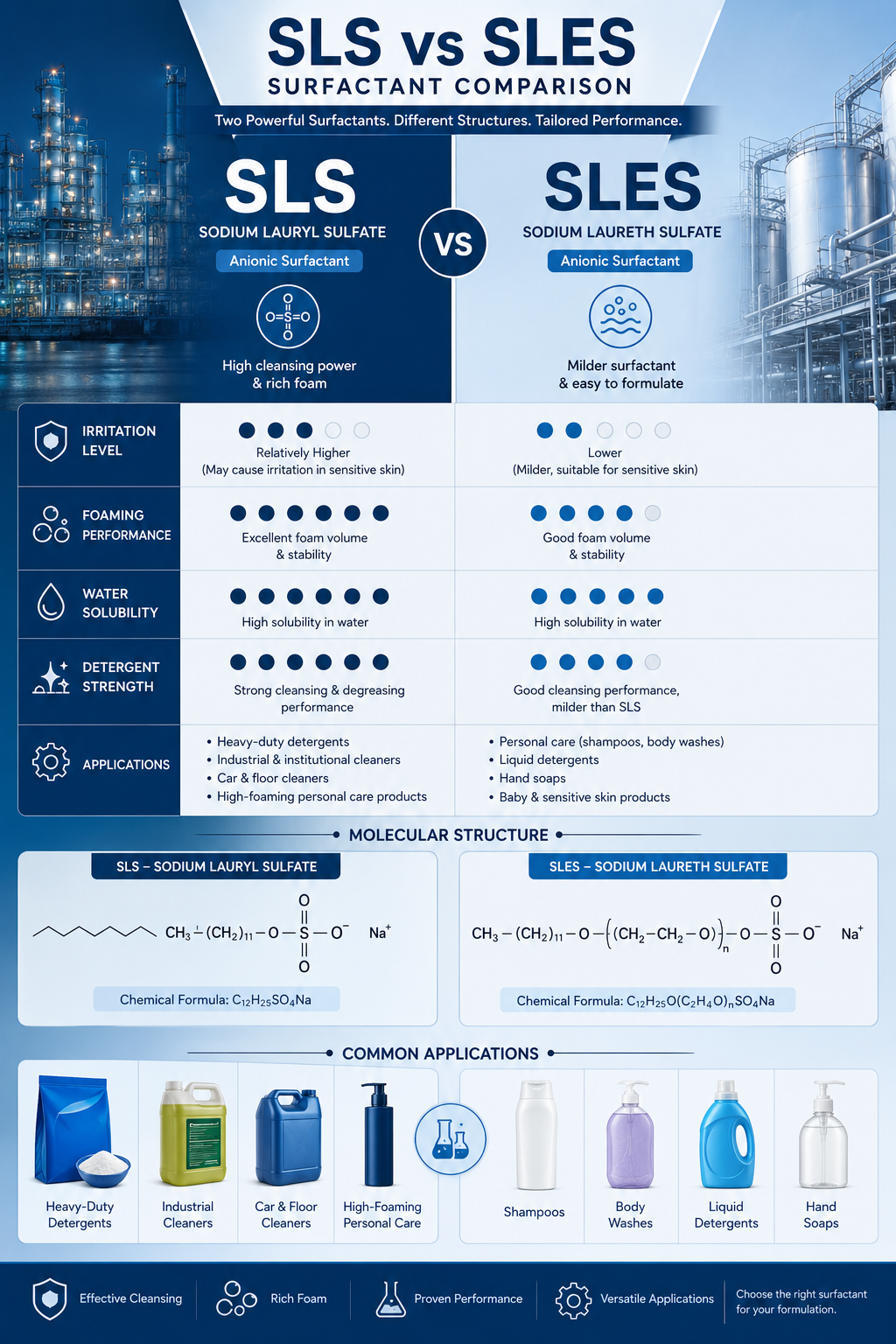
SLES vs SLS: Key Differences
| Property | SLS | SLES |
|---|---|---|
| Chemical Type | Anionic surfactant | Ethoxylated anionic surfactant |
| Cleansing Strength | Strong | Moderate |
| Foam Performance | High foam | Rich and softer foam |
| Skin Irritation | Higher | Lower |
| Mildness | Lower | Better |
| Typical Applications | Industrial cleaning, toothpaste | Shampoo, body wash |
| Cost | Usually lower | Slightly higher |
The primary difference is the ethoxylation process used in SLES manufacturing. This process reduces harshness and improves mildness, making SLES more suitable for skin-contact formulations.
Which One Is Better for Shampoo?
For most shampoo formulations, SLES is generally preferred because it provides a better balance between cleansing ability and scalp comfort.
SLES-based shampoos typically offer:
- Stable foam performance
- Pleasant sensory feel
- Reduced scalp dryness
- Better compatibility with conditioning agents
SLS may still be used in clarifying shampoos or deep-cleaning formulations where stronger oil removal is required.
Many manufacturers also combine SLES with amphoteric surfactants such as Cocamidopropyl Betaine (CAPB) to further improve mildness and foam stability.
Are SLES and SLS Safe?
Both SLES and SLS are widely used in regulated cosmetic and cleaning formulations worldwide. When formulated correctly and used within recommended concentrations, both ingredients are considered safe for commercial applications.
However, formulation quality, purity standards, and dosage control are important factors affecting final product performance.
For personal care applications, many manufacturers prefer high-purity SLES grades with low impurity levels to achieve better skin compatibility and formulation stability.
Why Many Manufacturers Choose SLES
In recent years, consumer demand for gentler cleansing products has increased significantly. As a result, SLES has become the preferred surfactant for many personal care brands.
Key reasons include:
- Better user comfort
- Improved foam aesthetics
- Good cost-performance balance
- Compatibility with modern formulations
- Suitable for daily-use products
SLES also works effectively with thickening agents, conditioning polymers, fragrances, and preservative systems commonly used in shampoo and body wash manufacturing.
How to Choose Between SLES and SLS
The choice between SLES and SLS depends on the target application and formulation requirements.
Choose SLS when:
- Strong degreasing is required
- Cost sensitivity is critical
- Industrial cleaning performance is the priority
Choose SLES when:
- Mild cleansing is important
- Products are designed for frequent skin contact
- Better foam texture is desired
- Premium personal care positioning is required
For many manufacturers, combining different surfactants provides the best balance between cleaning efficiency, foam performance, viscosity, and user experience.
Final Thoughts
Although SLES and SLS are both highly effective surfactants, they serve different formulation goals.
SLS provides powerful cleaning performance and strong foam generation, making it suitable for industrial and heavy-duty applications. SLES offers a milder cleansing profile and improved skin compatibility, making it the preferred choice for many personal care products.
As consumer expectations continue evolving toward gentler and more skin-friendly formulations, SLES remains one of the most important surfactants in modern shampoo and body care manufacturing.
Manufacturers selecting surfactants should evaluate not only cleaning performance, but also formulation compatibility, end-user comfort, product positioning, and long-term market trends.