








Potassium Hydroxide (KOH): Properties, Safety, Industrial Uses, and How to Choose the Right Grade
Release time: 2026-04-23
Potassium hydroxide (KOH), also known as caustic potash, is a strong alkali widely used in chemical processing, detergents, batteries, food processing, biodiesel production, pH control, and specialty manufacturing. For industrial buyers, the main issue is not simply what KOH is, but which grade, concentration, and form are suitable for the intended process, handling conditions, and purity requirements.
This guide explains the main properties of potassium hydroxide, its safety considerations, typical industrial uses, and the key points buyers should check before placing an order.
What Is Potassium Hydroxide?
Potassium hydroxide is an inorganic compound with the chemical formula KOH and CAS No. 1310-58-3. It is a highly alkaline, corrosive substance that dissolves readily in water and releases heat during dissolution. In the market, potassium hydroxide is commonly supplied in liquid solution, flakes, or pellets, depending on the application and handling preference.
Because KOH is strongly hygroscopic, it absorbs moisture from the air easily. It can also react with carbon dioxide in the air to form potassium carbonate. This is one reason why packaging integrity, storage conditions, and shipment timing matter for buyers who need stable assay and low impurity variation.
Basic Properties of Potassium Hydroxide
| Item | Details |
|---|---|
| Chemical Name | Potassium Hydroxide |
| Formula | KOH |
| CAS Number | 1310-58-3 |
| Appearance | White solid in flakes or pellets, or colorless to slightly tinted liquid solution |
| Nature | Strong alkali, strongly corrosive |
| Solubility | Highly soluble in water, alcohol, and glycerol |
| pH | Strongly alkaline in aqueous solution |
| Key Handling Characteristic | Absorbs moisture and carbon dioxide from air |
For most buyers, the most commercially relevant properties are not only the chemical formula or solubility, but also the material’s hygroscopic behavior, corrosiveness, impurity profile, and packaging stability during storage and transport.
Common Commercial Forms of KOH
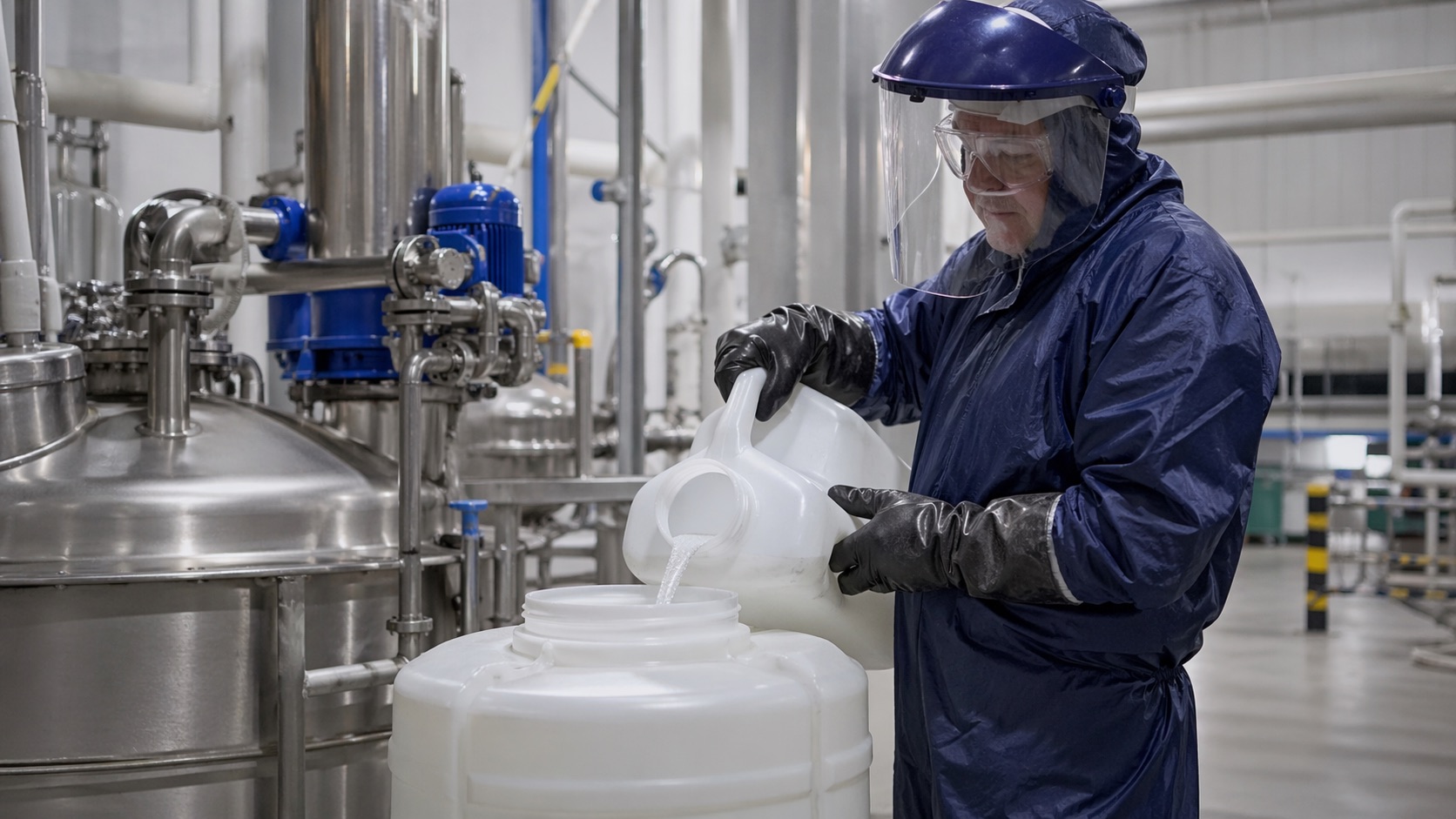
Liquid Potassium Hydroxide
Liquid KOH is commonly supplied at concentrations such as 45% or 50%. It is suitable for users who want to avoid on-site dissolution of solids and who already have compatible storage tanks, transfer pumps, and corrosion-resistant process equipment.
Potassium Hydroxide Flakes
KOH flakes are widely used in industrial purchasing because they are easier to package, store, and dose than many bulk liquid arrangements, especially when buyers need flexible batch preparation.
Potassium Hydroxide Pellets
KOH pellets are often preferred where cleaner metering, lower dust generation, or more consistent solid handling is required. In some applications, pellet form may be operationally more convenient than flakes, although the actual choice depends on the customer’s feeding and dissolution system.
Where Potassium Hydroxide Is Used
Chemical Manufacturing
KOH is used as a strong base in synthesis, neutralization, pH adjustment, salt formation, and intermediate production. In many chemical plants, the selection of KOH depends on whether the downstream process can tolerate impurities such as carbonate, chloride, sodium, or trace metals.
Detergents and Cleaning Products
Potassium hydroxide is used in the production of liquid soaps, soft soaps, specialty cleaners, and alkaline cleaning formulations. Compared with sodium hydroxide in some formulations, KOH may support different solubility or product texture targets.
Biodiesel Production
KOH can function as a catalyst in biodiesel manufacturing. Buyers in this sector usually pay close attention to assay consistency, moisture exposure, and storage conditions, because these factors can influence process efficiency and handling reliability.
Battery and Electrochemical Applications
Potassium hydroxide is used as an electrolyte component in certain battery systems and other electrochemical applications. In these uses, impurity control becomes more important than in general industrial cleaning or neutralization applications.
Food Processing
In food-related uses, potassium hydroxide may be used as a processing aid, acidity regulator, or pH control material in approved applications, subject to regulatory and specification requirements. Buyers in this sector should verify food-grade compliance, documentation, and applicable local regulatory standards before purchase.
Water Treatment and pH Control
KOH is used in some industrial water treatment and process control applications where a strong alkali is needed to adjust pH or support specific chemical conditions.
Why Grade Selection Matters
Not all potassium hydroxide is equivalent from a purchasing standpoint. A buyer may request KOH with the same nominal concentration from two suppliers and still receive materials that perform differently in actual production. The difference often comes from impurity profile, packaging quality, storage history, and the suitability of the selected grade for the end use.
For example, a general industrial-grade KOH may be suitable for routine pH adjustment or cleaning-agent production, but it may not be appropriate for food, pharmaceutical-related, battery-related, or high-purity process requirements. This is why buyers should focus on specification fit, not just price per ton.
How to Choose the Right Potassium Hydroxide Grade
Choose by Application
The first step is to define the actual use environment. For general chemical processing, standard industrial-grade material may be sufficient. For food-related processing, the buyer should confirm food-grade documentation and compliance. For sensitive electrochemical or specialty manufacturing applications, a tighter impurity specification may be necessary.
Choose by Form: Liquid vs Flakes vs Pellets
Liquid KOH is often more suitable for continuous industrial systems that already have appropriate tanks and corrosion-resistant transfer infrastructure. Flakes and pellets are more flexible for batch use, export packaging, and customers who prepare solution on site. The right choice depends on operating convenience, freight economics, storage conditions, and feeding method.
Choose by Purity Requirements
Buyers should request a specification sheet or COA and review not only KOH assay, but also relevant impurity indicators. Depending on the application, important checks may include potassium carbonate, chloride, sulfate, iron, sodium, heavy metals, or other trace contaminants.
Choose by Storage and Logistics Conditions
If the product will be stored for extended periods, moved through humid climates, or shipped internationally, packaging strength and sealing performance become important. For solid KOH, exposure to humidity and air can affect condition and assay stability. For liquid KOH, tank compatibility, unloading method, and temperature considerations should be checked in advance.
What Buyers Should Check Before Ordering
| Checkpoint | Why It Matters |
|---|---|
| Assay or concentration | Determines whether the product matches the intended formulation or process requirement |
| Form supplied | Liquid, flakes, or pellets affect storage, dosing, freight, and handling |
| Impurity limits | Can affect downstream performance, product quality, or compliance |
| Grade type | Industrial grade and food-grade material are not interchangeable in regulated uses |
| Packaging | Helps control moisture pickup, contamination risk, and shipment damage |
| COA and supporting documents | Important for quality verification, audits, and repeat purchasing |
| Shipment mode | Needed to plan loading, storage, port handling, and hazardous goods compliance |
Many purchasing problems come not from the base product itself, but from insufficient discussion before shipment. A professional KOH purchase usually requires the buyer and supplier to align on concentration, grade, impurity limits, packaging, labeling, loading method, and document package before the order is finalized.
Potassium Hydroxide Safety and Handling
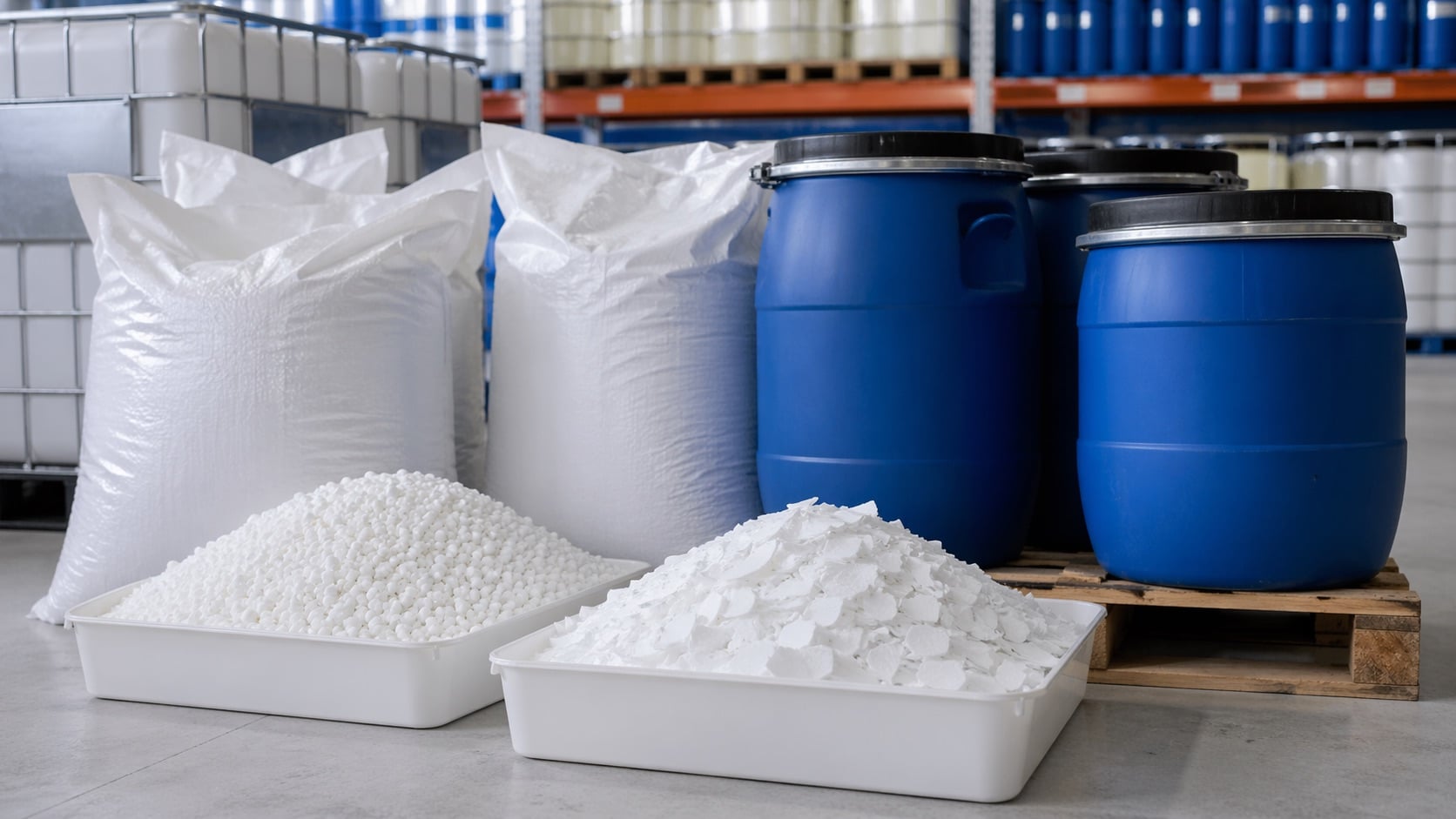
Potassium hydroxide is a corrosive chemical and should be handled with appropriate industrial precautions. It can cause severe burns to skin and eyes, and inhalation of dust or mists may irritate or damage the respiratory tract. Anyone using KOH in manufacturing, storage, or repacking should follow the relevant safety procedures and SDS guidance.
Main Safety Risks
- Severe skin and eye corrosion
- Respiratory irritation from dust or aerosol exposure
- Heat release when dissolved or diluted in water
- Material compatibility issues with certain metals and equipment
Handling Recommendations
- Use suitable gloves, eye protection, protective clothing, and face protection where required
- Handle in well-ventilated areas
- Keep containers tightly closed to reduce moisture and carbon dioxide exposure
- Use compatible equipment and containers designed for corrosive alkalis
- When preparing solution, add KOH carefully and control temperature rise
Storage Recommendations
- Store in a cool, dry, and well-ventilated place
- Protect solid KOH from humidity
- Prevent contact with incompatible materials
- Maintain packaging integrity during warehousing and transport
Packaging Options Commonly Seen in Trade
Packaging may vary by supplier and product form, but common export and industrial supply options include bags, drums, IBCs, or bulk liquid arrangements. Buyers should not assume that all packaging formats provide equal moisture protection or handling convenience.
For solid KOH, inner lining quality and bag sealing matter. For liquid KOH, tank or container compatibility, valve configuration, and unloading requirements should be reviewed before shipment. Export buyers should also confirm labeling, palletization, and hazardous goods declaration requirements based on destination market and transport mode.
Common Mistakes Buyers Make
Buying by Price Only
Low price can become expensive if the delivered product has unstable assay, unsuitable impurity limits, weak packaging, or poor storage performance.
Ignoring Moisture Sensitivity
Solid KOH is highly hygroscopic. Inadequate storage and damaged packaging can lead to caking, assay drift, and handling difficulties.
Using Industrial Grade in Sensitive Applications
Applications involving food processing, specialty manufacturing, or electrochemical systems may require tighter specifications than standard industrial material.
Not Verifying COA Details
Some buyers check only the KOH percentage and ignore carbonate, chloride, iron, sodium, or other indicators that may affect final performance.
Overlooking Logistics Compatibility
The best form for one facility may be the wrong form for another. A buyer with no safe liquid unloading setup may be better served by flakes or pellets, even if liquid KOH appears economical on paper.
How to Evaluate a Potassium Hydroxide Supplier
When sourcing potassium hydroxide for regular industrial use, buyers should assess more than product availability. A reliable supplier should be able to provide clear specifications, stable documentation, appropriate packaging options, and realistic answers regarding shipping, lead time, and consistency.
Useful questions to ask include:
- What concentrations and forms are available?
- What are the standard impurity limits?
- Can the supplier provide a recent COA and SDS?
- What packaging options are available for export or domestic delivery?
- How is moisture protection handled for solid material?
- What is the usual lead time for repeat orders?
- Can the supplier maintain consistent specifications across batches?
Conclusion
Potassium hydroxide is a widely used and commercially important alkali, but successful purchasing depends on more than recognizing the name or formula. Buyers need to match the right grade, concentration, and form to the actual process requirement, while also checking impurity limits, packaging strength, storage conditions, and safety needs.
For routine industrial use, standard-grade KOH may be sufficient. For regulated or more sensitive applications, documentation and impurity control become much more important. A better purchase decision usually comes from comparing specification fit, handling practicality, and supplier reliability rather than comparing price alone.
FAQ
What is the difference between potassium hydroxide flakes and pellets?
The main difference is physical form. Both provide potassium hydroxide, but flakes and pellets can behave differently in storage, feeding, dust control, and dissolution practice. The better choice depends on the user’s handling system and process needs.
Is liquid potassium hydroxide better than solid KOH?
Not necessarily. Liquid KOH can be more convenient for continuous operations with proper storage and transfer systems, while solid KOH is often more flexible for batch use, export handling, and facilities that prepare solution on site.
Why does potassium hydroxide require tight packaging?
KOH absorbs moisture from the air and can also react with carbon dioxide. Poor sealing may affect physical condition, assay stability, and handling performance, especially for solid material.
What should I check on a potassium hydroxide COA?
At minimum, buyers usually check assay or concentration. Depending on the application, they may also need to review potassium carbonate, chloride, sulfate, iron, sodium, heavy metals, or other impurity indicators.
Is potassium hydroxide hazardous?
Yes. Potassium hydroxide is corrosive and can cause severe burns and serious eye damage. Handling, storage, and transport should follow applicable safety and regulatory requirements.
Can industrial-grade potassium hydroxide be used in food applications?
Buyers should not assume that industrial-grade material is suitable for food-related use. Food applications require the appropriate grade, documentation, and compliance confirmation.
Why do some buyers choose KOH instead of sodium hydroxide?
The choice depends on process chemistry, formulation requirements, solubility behavior, end-product characteristics, and downstream performance expectations. The two alkalis are not always interchangeable in commercial practice.
What industries commonly buy potassium hydroxide?
Typical sectors include chemical manufacturing, detergents, biodiesel, food processing, water treatment, batteries, and other industrial processes that require a strong alkali.
What is the usual commercial concentration of liquid KOH?
Concentrations such as 45% and 50% are commonly seen in trade, although availability can vary by supplier and market.
What is the most important rule when buying potassium hydroxide?
The most important rule is to buy according to actual process requirements rather than price alone. The correct grade, impurity profile, packaging, and handling fit are often more important than nominal cost per ton.